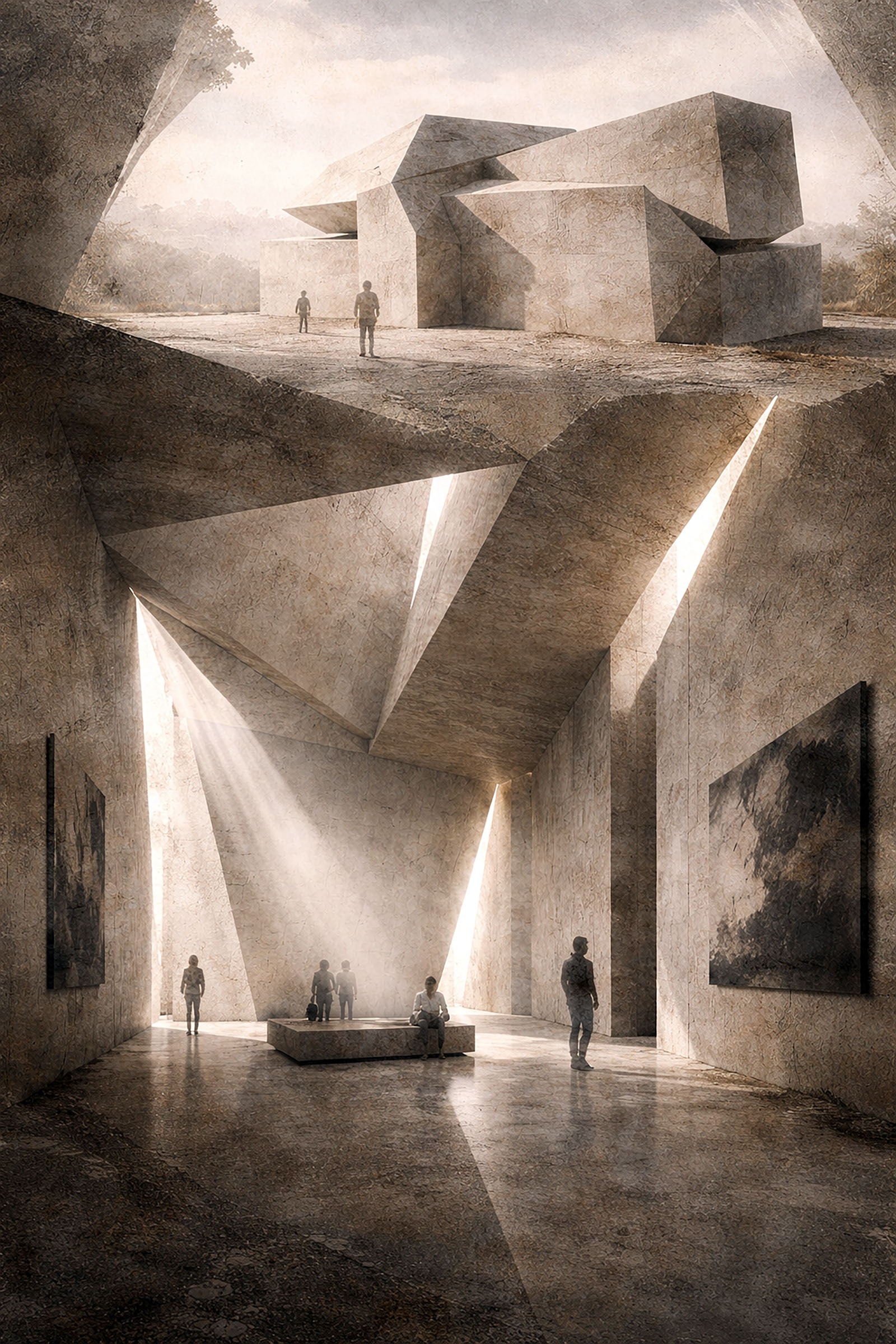
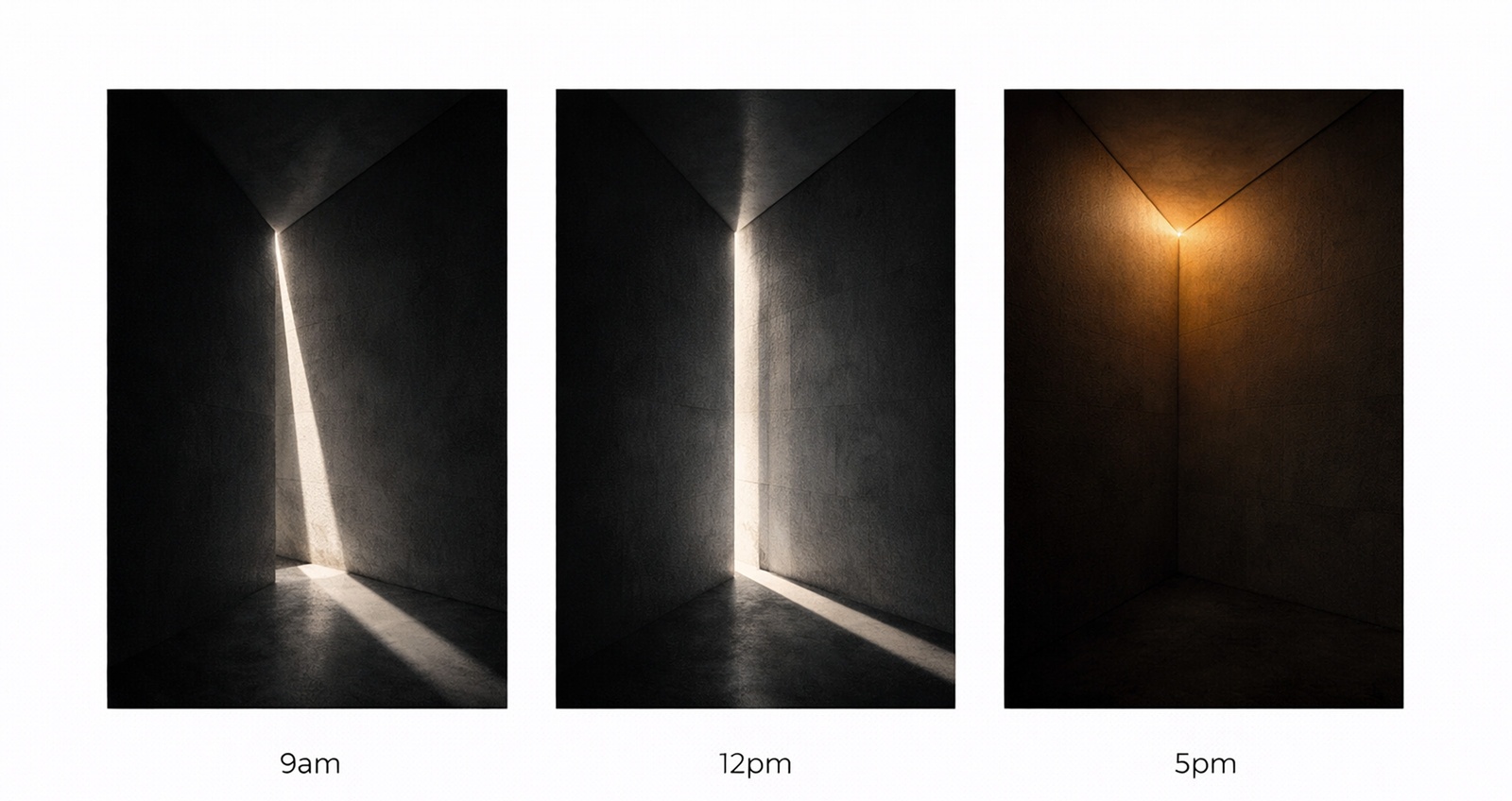
Monolith for Light is a study of mass and restraint in an open, barren field. The building is held as one dense body—concrete and limestone. No glass, so daylight arrives only through cuts. Light becomes measure: a line, a depth, a duration.
Inspired by In Praise of Shadows, the project explores how atmosphere is built through restraint. Shadows are treated as structure; light frames movement, sets tempo, and produces "rooms" defined by time rather than decoration.
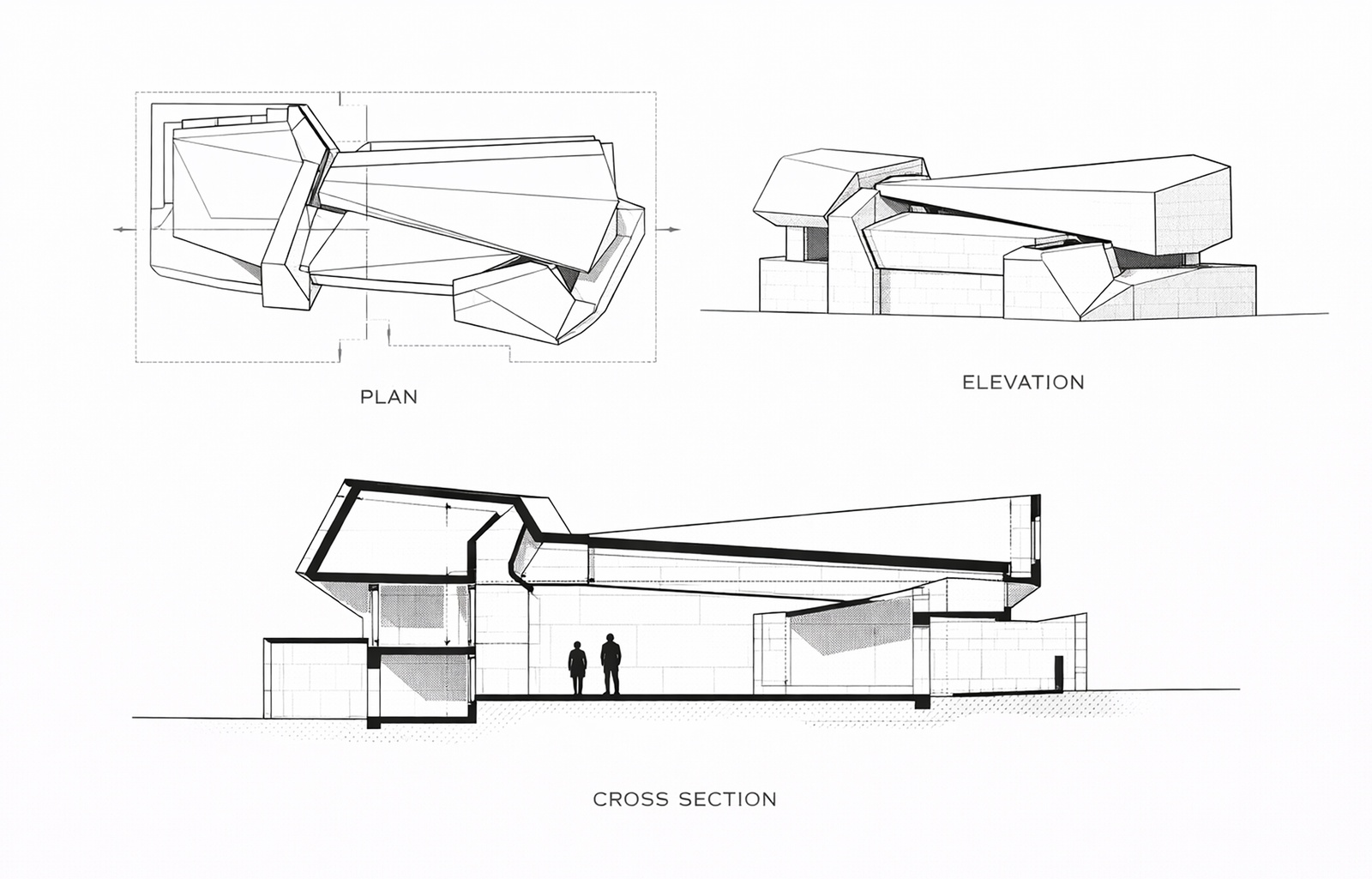
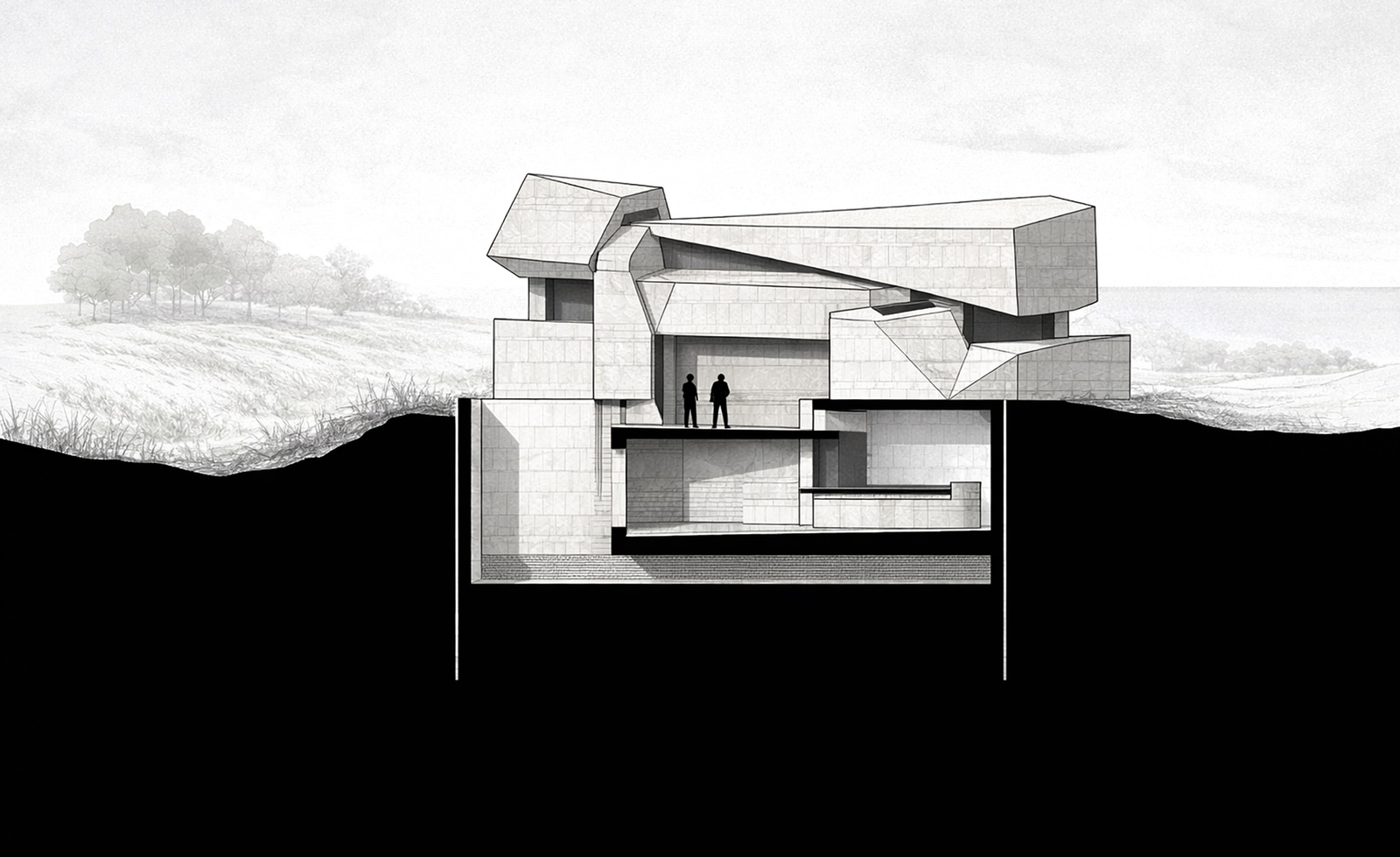
Plan, elevation, and section establish the controlled cuts and the internal sequence as a spatial narrative rather than a transparent container.
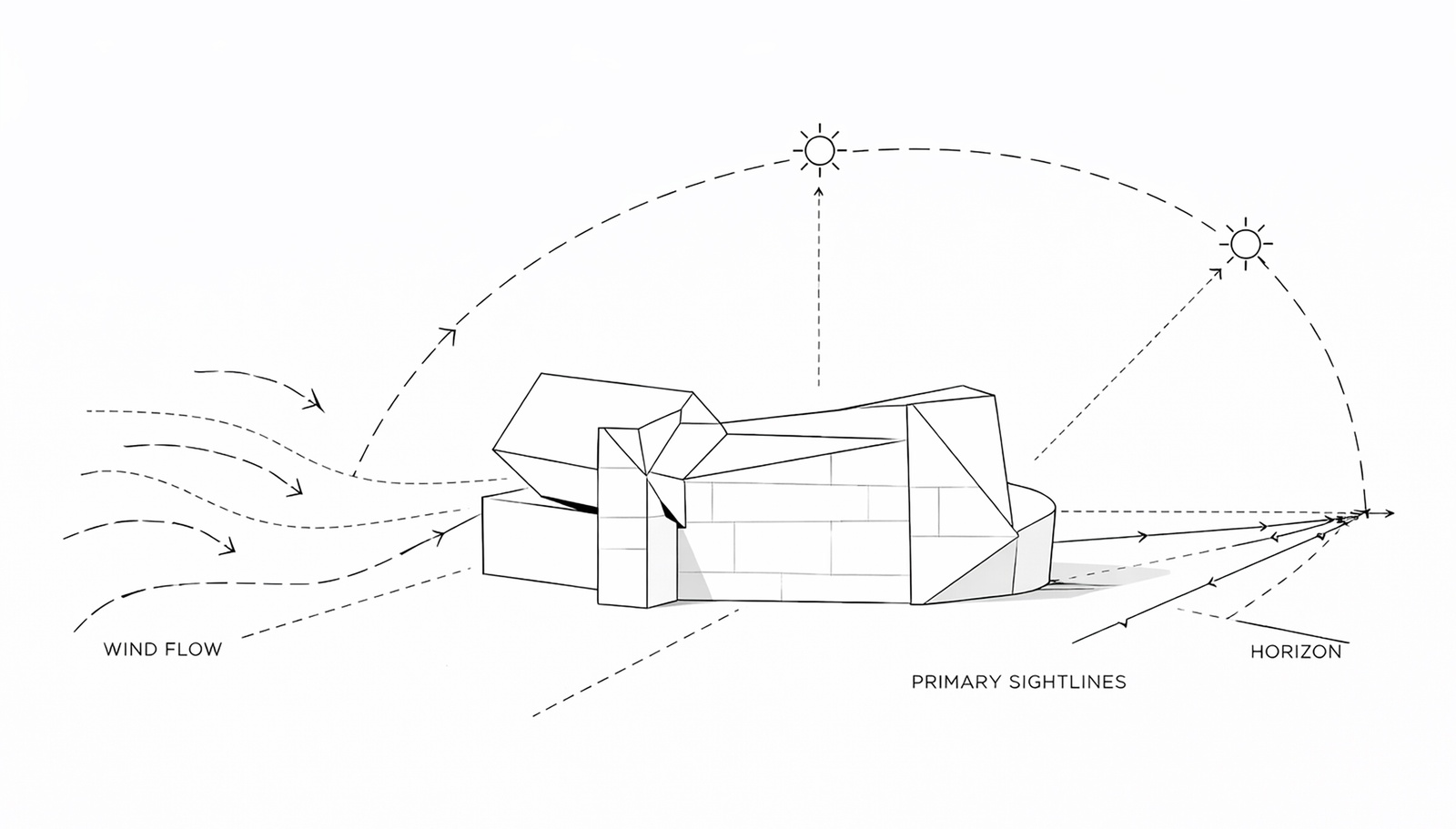
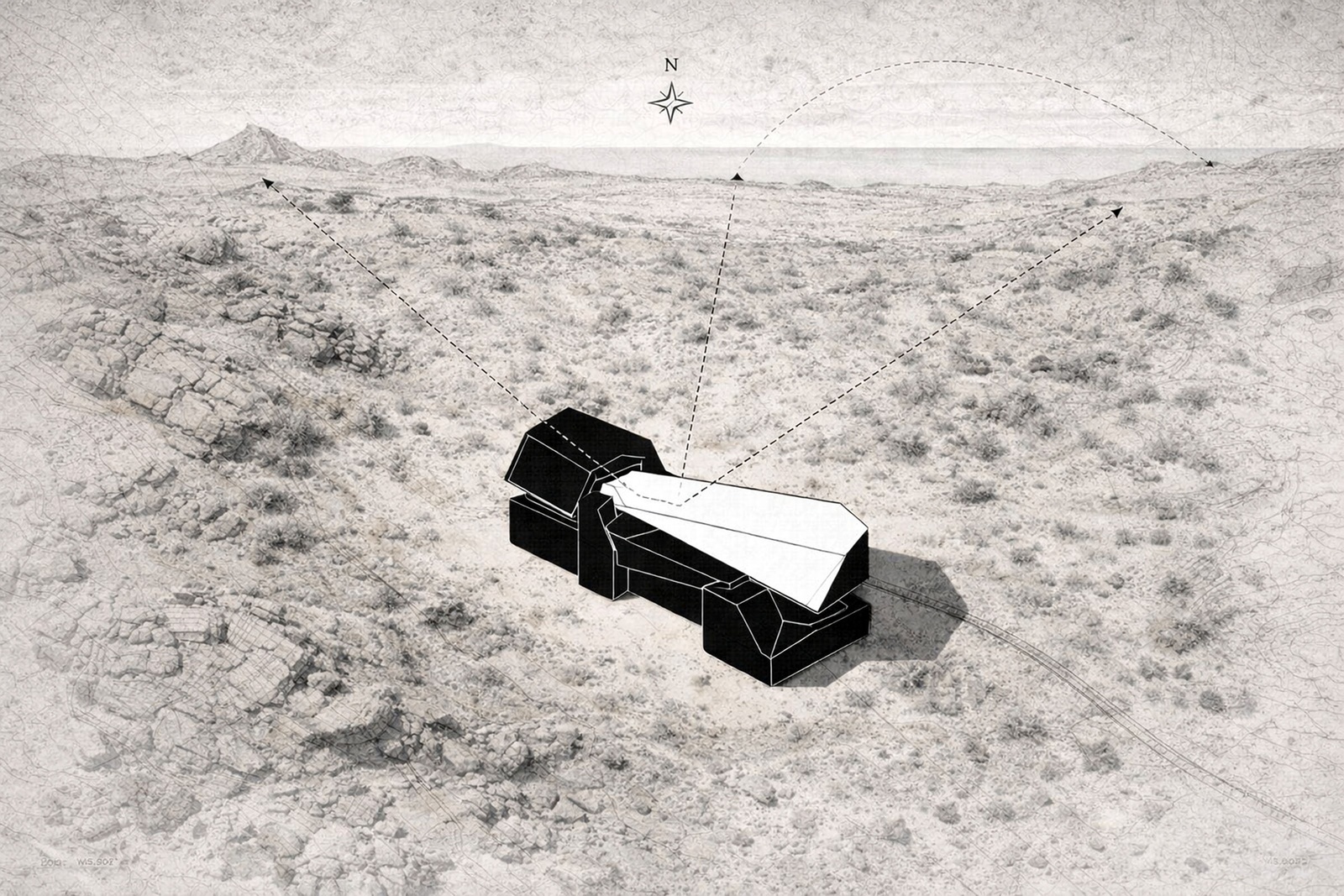
The project frames the landscape as part of the gallery experience—orientation, horizon lines, and the way wind and sun set up a "reading" of the building before entry.
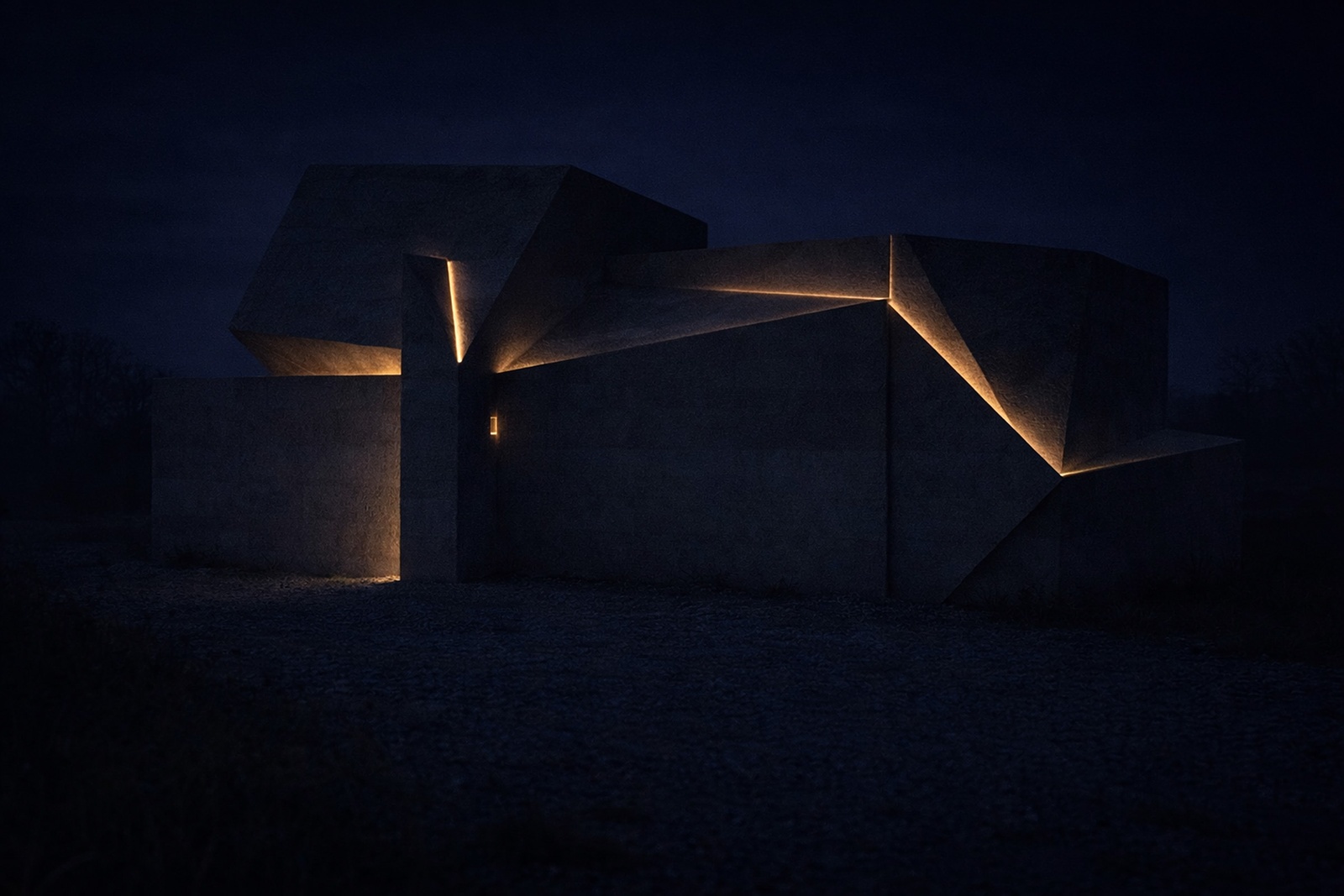
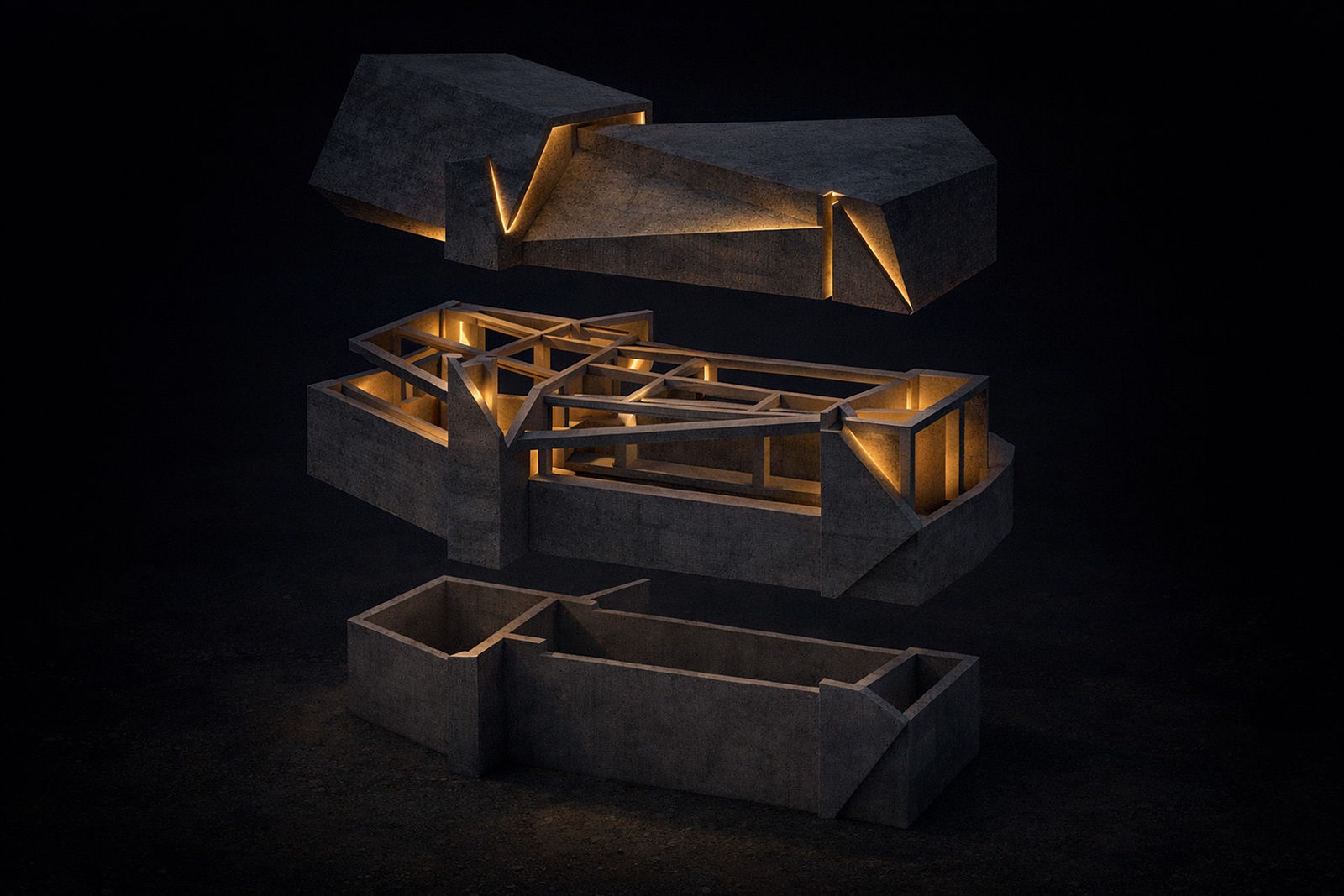
At night, concealed lighting returns the same cuts and edges as a new structure. The mass remains unchanged, but its hierarchy is rewritten by illumination.
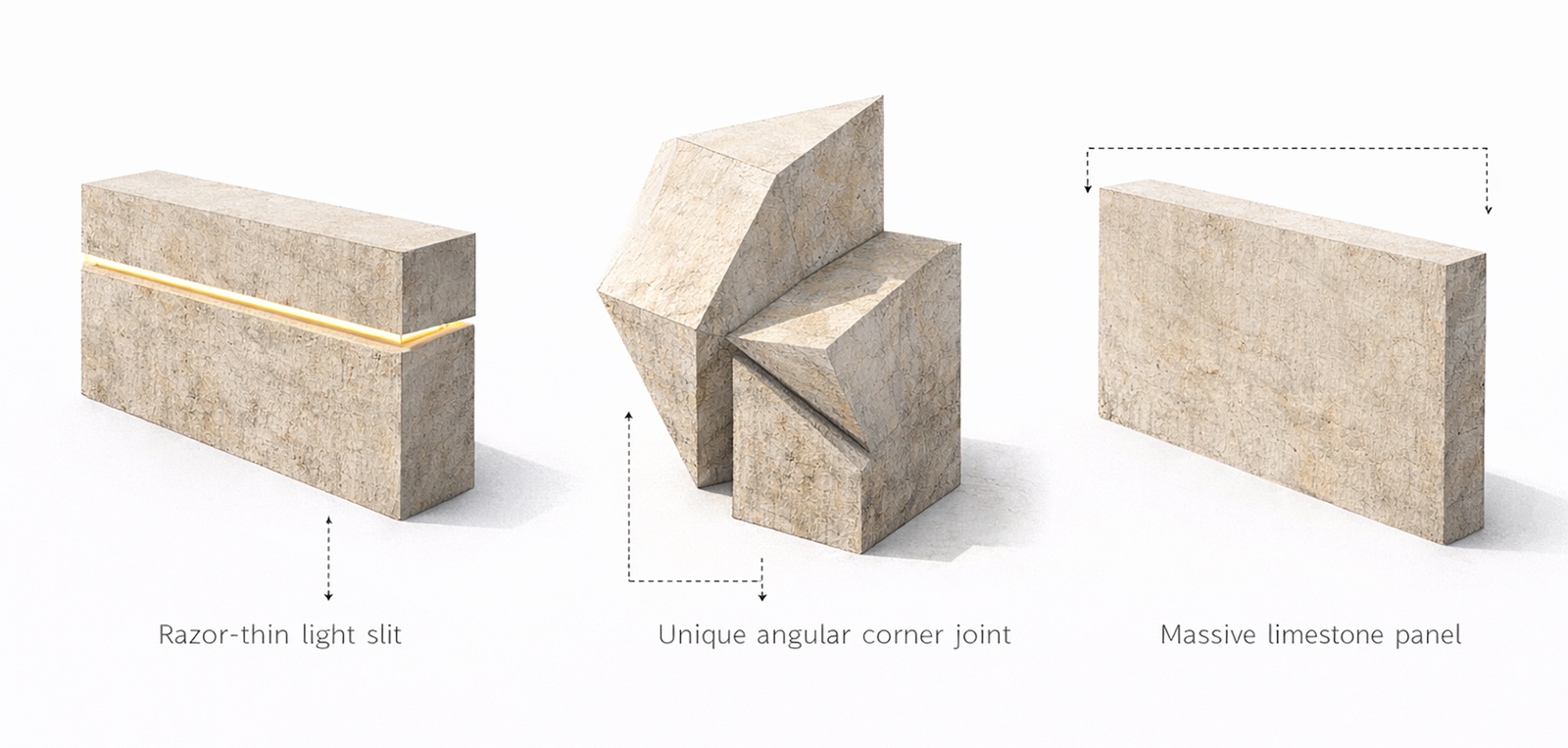
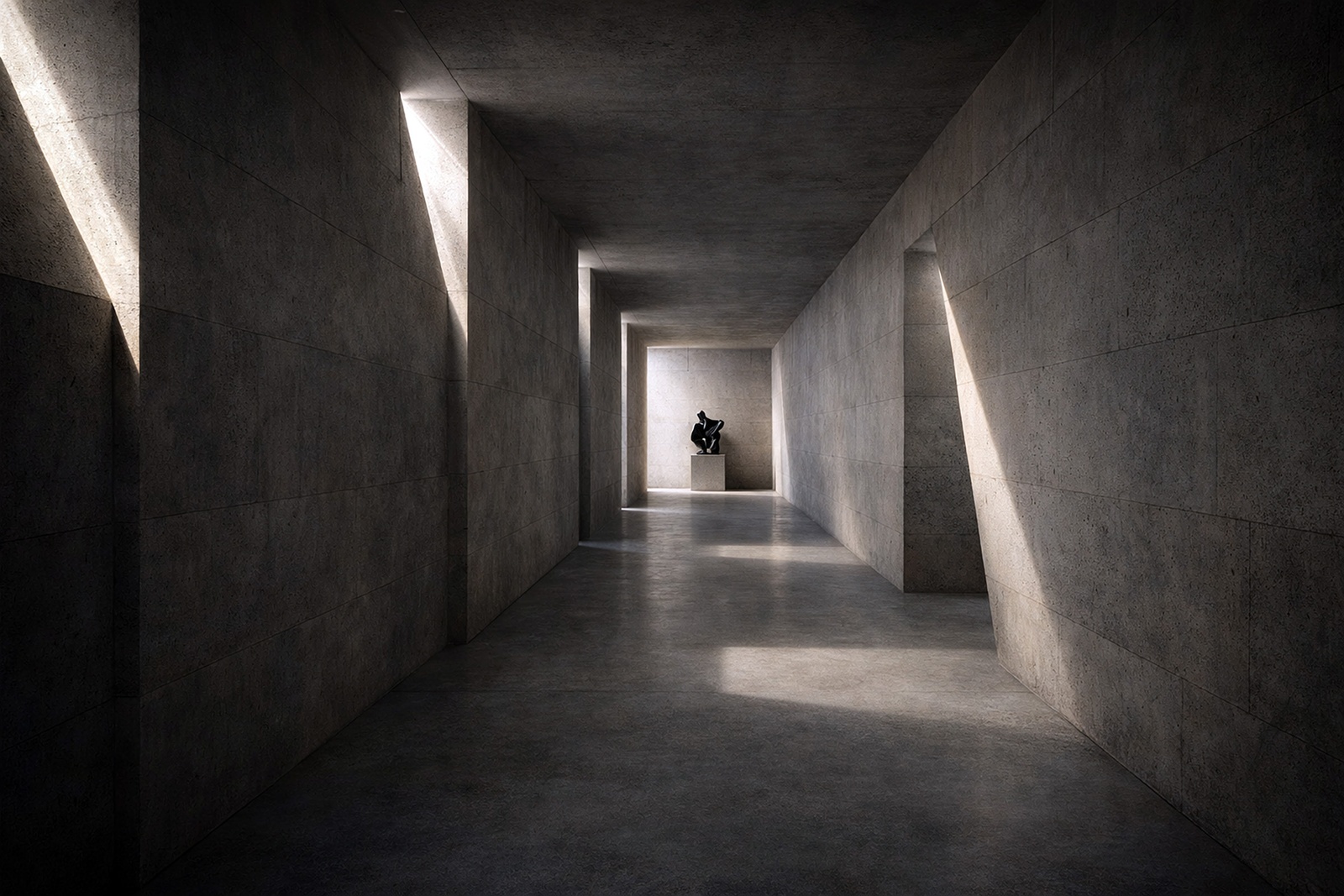
A corridor becomes a measuring device: thin slits and angled surfaces turn light into direction, duration, and pressure—guiding how long the visitor lingers and what becomes visible.
A sectional view clarifies how the interior voids are carved and how the building holds darkness as a deliberate spatial condition.
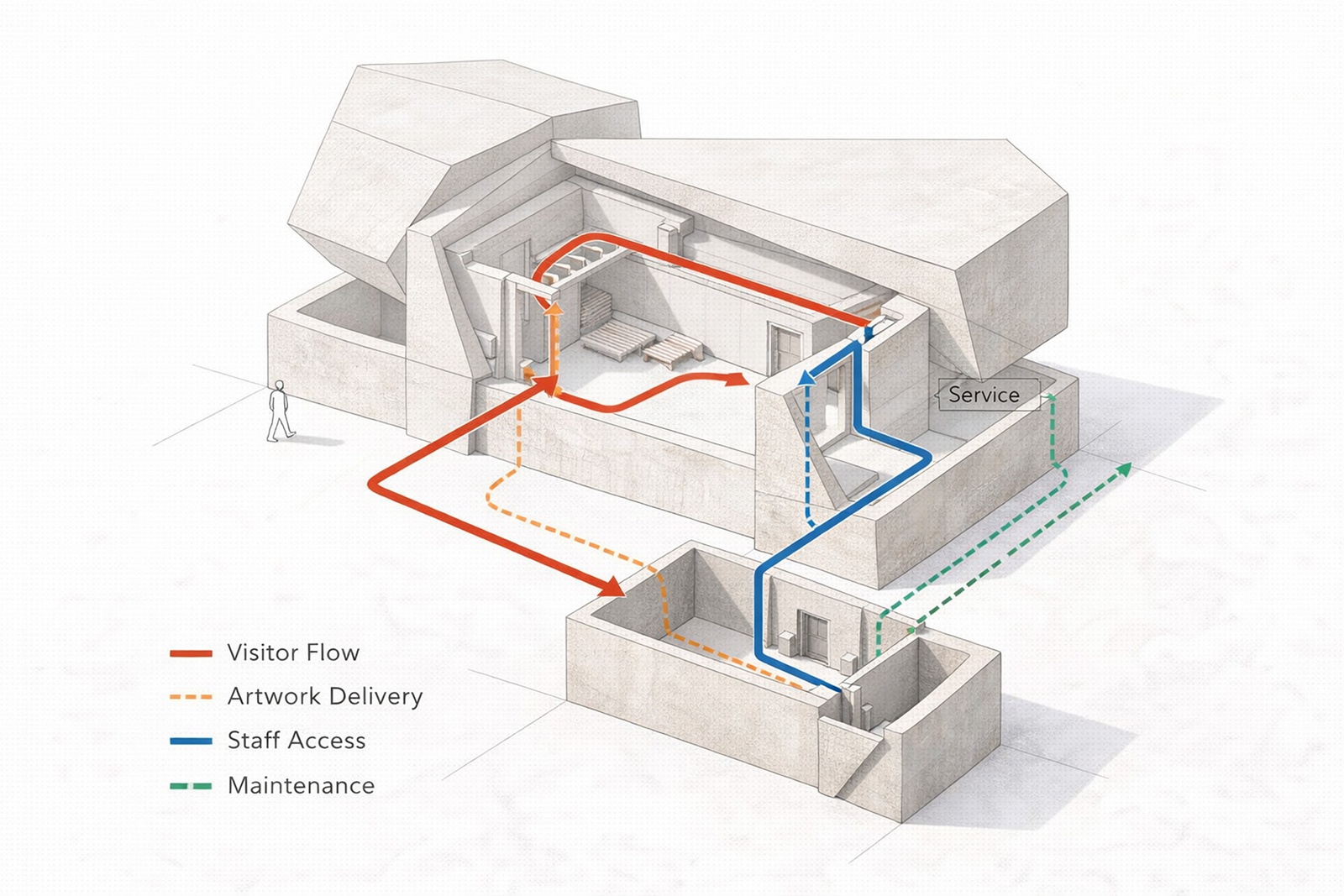
The final diagram summarizes circulation and service logic, separating visitor movement from staff access and maintenance routes.