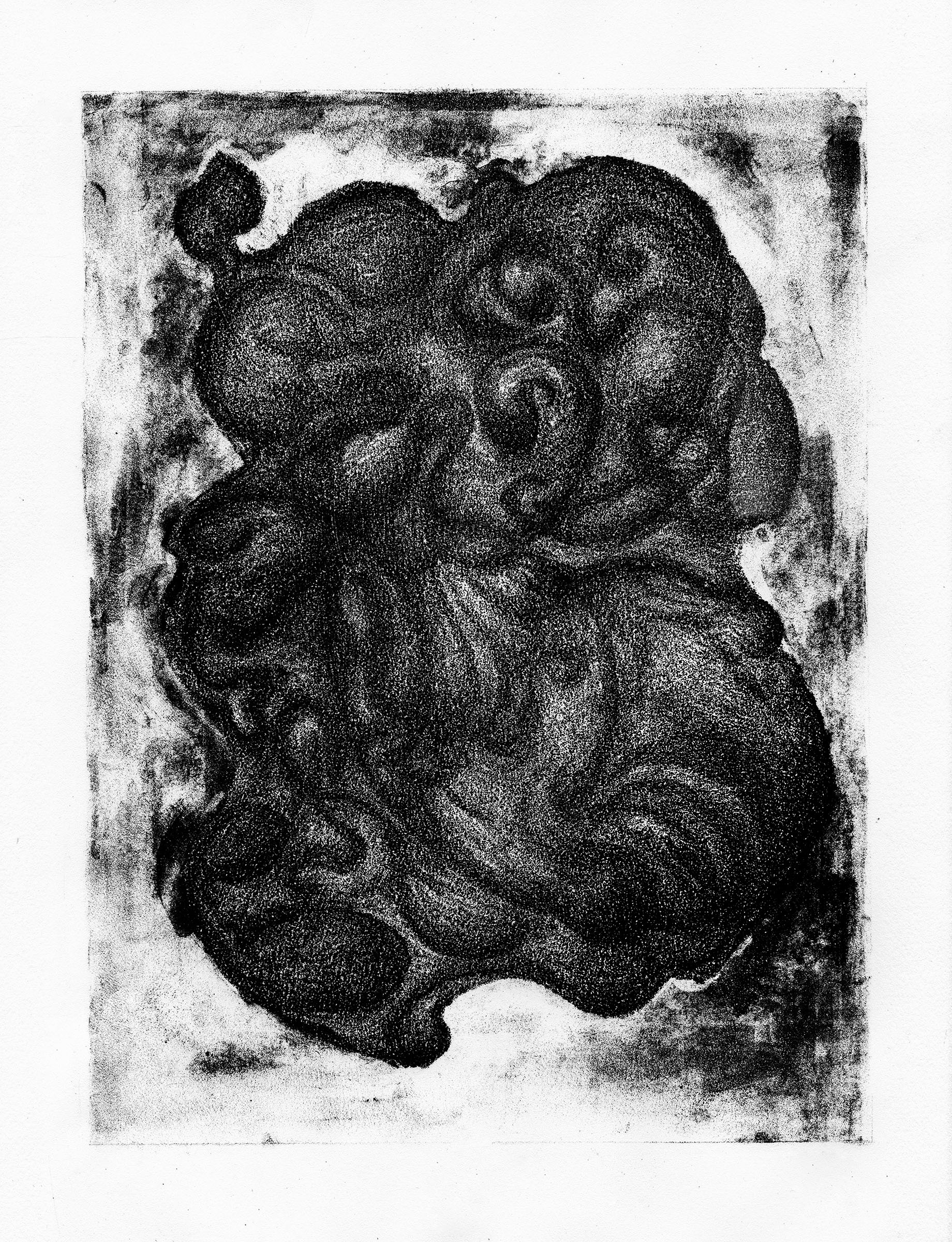
Inspired by Masks (女面, Onnamen) by Fumiko Enchi (1958). The face as fluid structure — forming and dissolving within social relationships. Gesture replaces representation; surfaces fold into one another.
Masks by Dai Pan is a limestone lithography printmaking series inspired by Fumiko Enchi, exploring the face, concealment, relation, and abstraction.
Related archive: Masks by Dai Pan , SVA Design
Inspired by Masks (女面, Onnamen) by Fumiko Enchi (1958). Rather than depicting recognizable identities, the works approach the face as a fluid structure — something that forms and dissolves within social relationships. Gesture replaces representation; surfaces fold into one another, suggesting expressions that never fully stabilize.
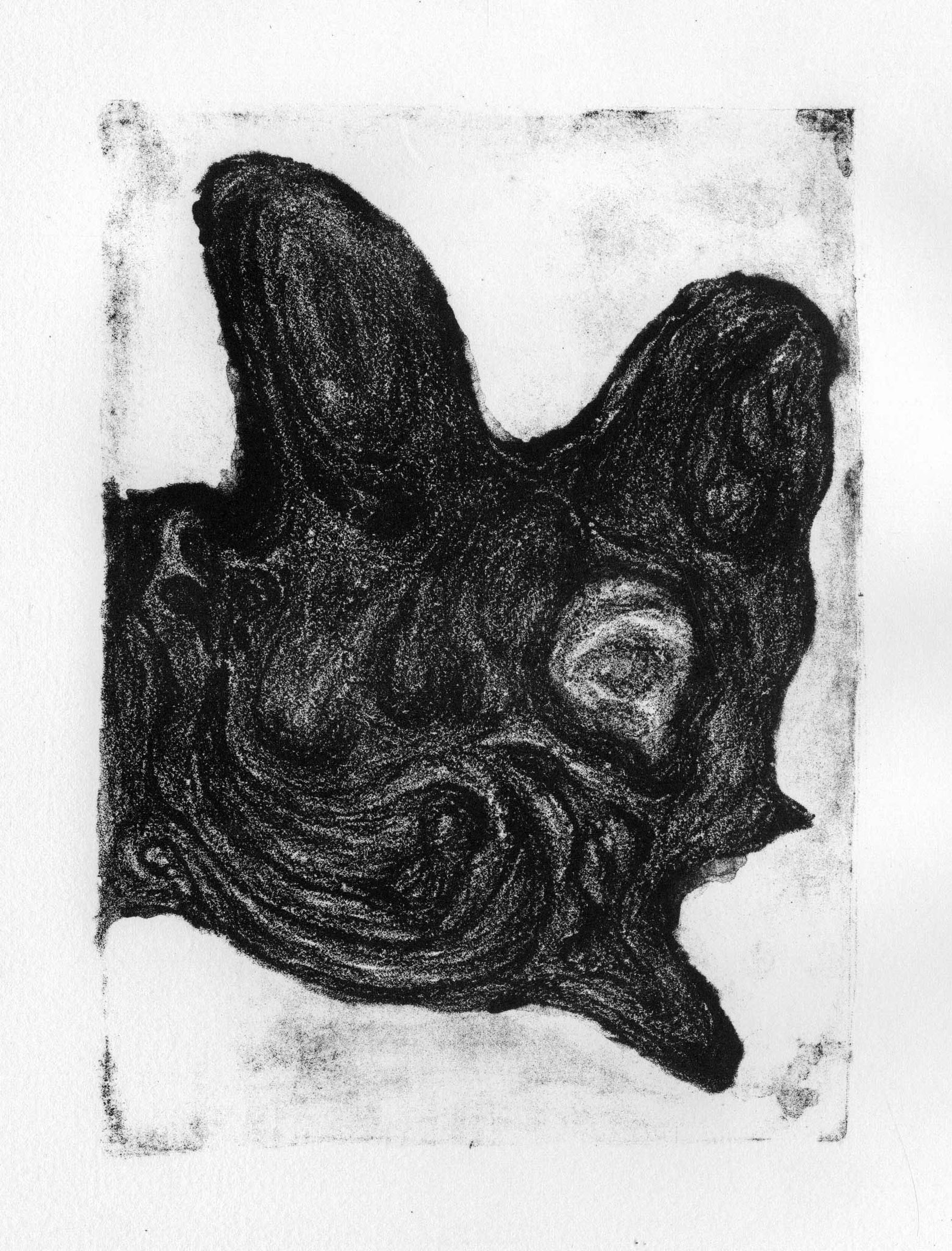
The mask here is not a disguise but a condition. It exists in the tension between concealment and revelation, between the desire to remain unseen and the urge to be understood. Eyes emerge and disappear, fragments gather and disperse, and abstraction becomes a language for something inherently ungraspable.
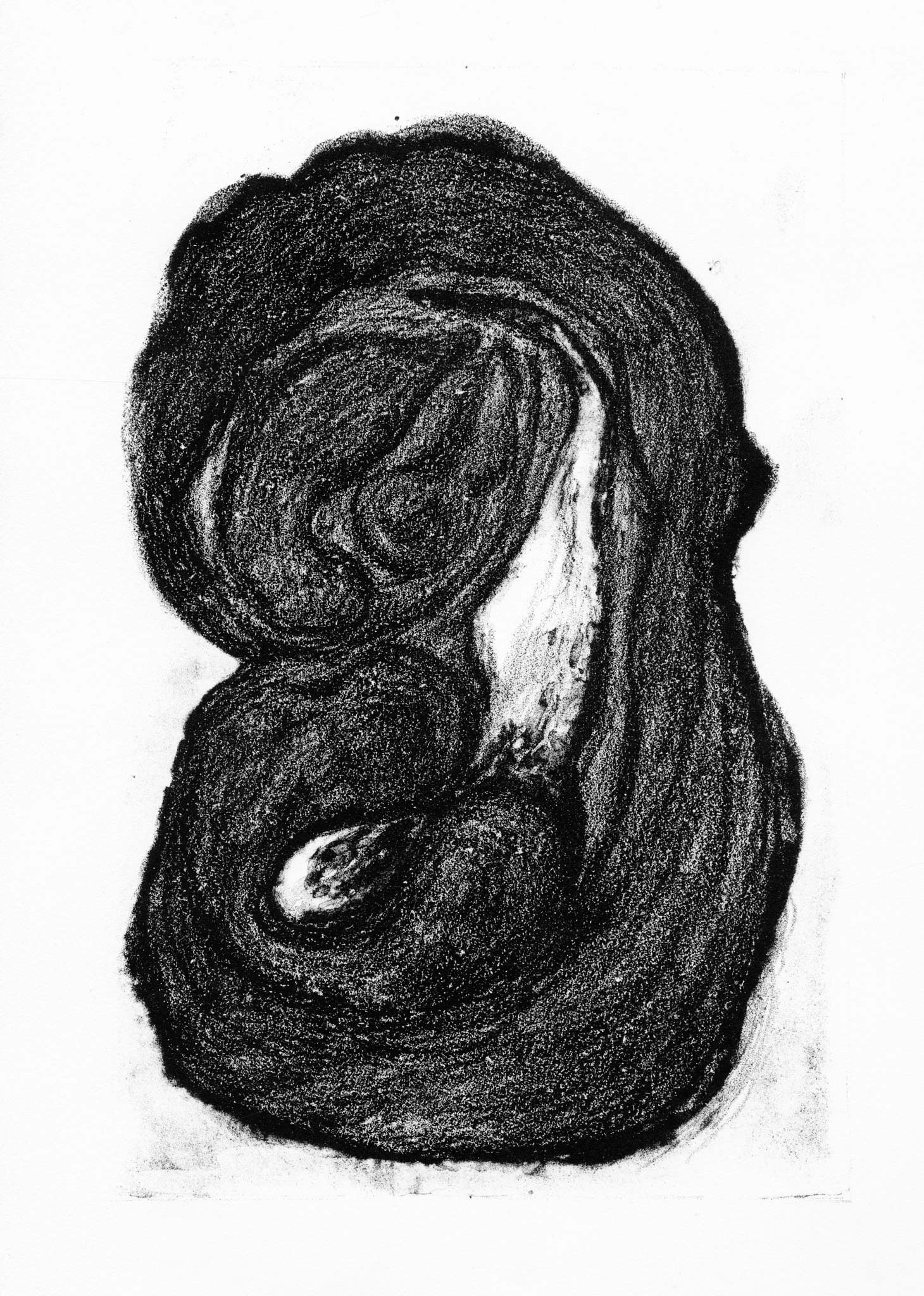
Curiosity here becomes a form of pressure — an invisible force that bends perception and reshapes the self. The desire to look and the resistance to being seen collide, compressing the interior until something formless escapes. What emerges is neither body nor gesture but a drifting presence, slipping through dense structures of relation like vapor through sealed surfaces. Twisted, enclosed, and endlessly folding back onto itself, the form recalls a fragile Möbius continuity — an unstable infinity sustained by tension rather than stability.
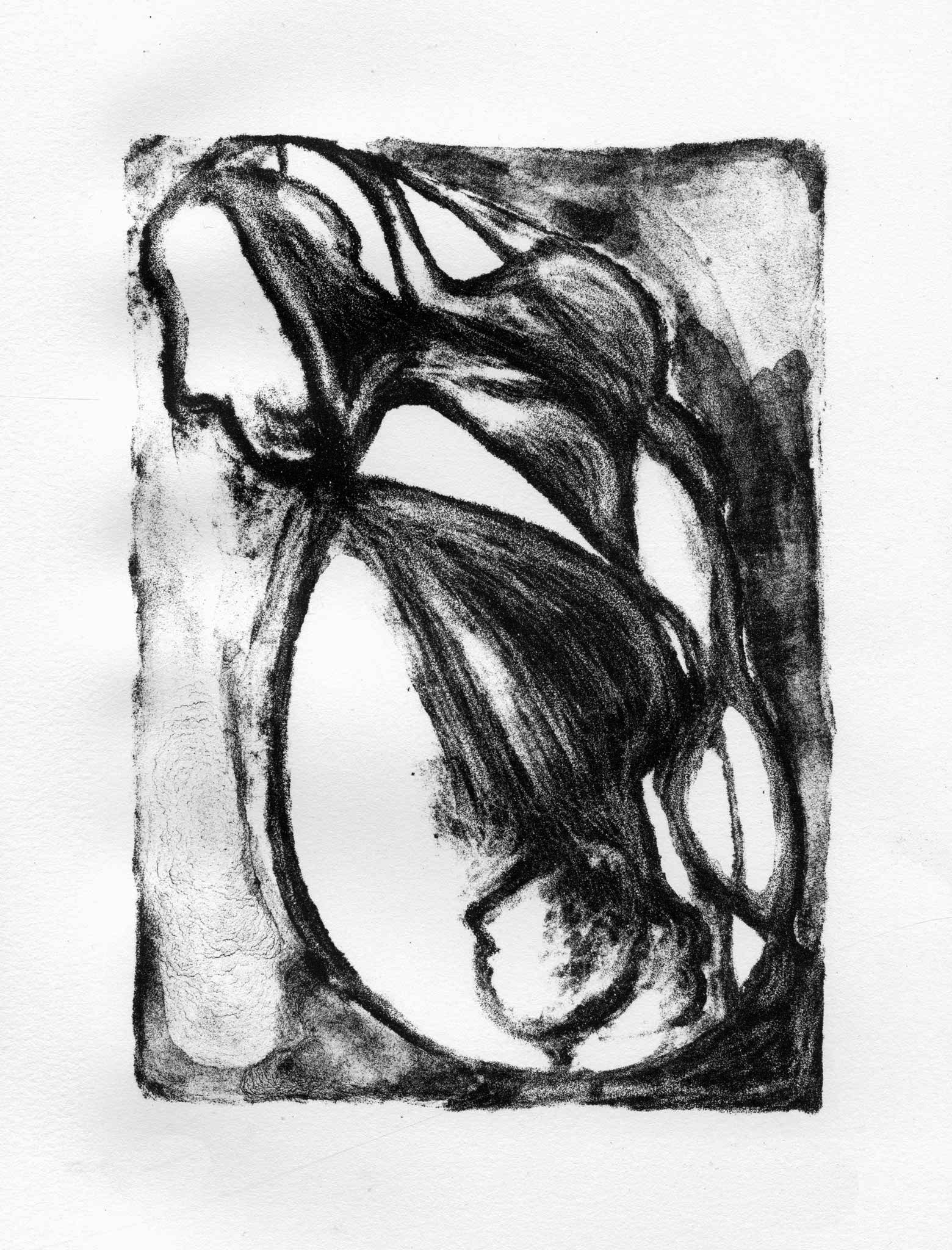
Repetition becomes a process of reduction. Language loses weight as actions remain, stripped of narrative and left nearly bare. Attraction, obsession, and projection dissolve into a single directional movement toward inevitability. Like a solitary structure placed in open terrain, detached from the surrounding city yet still governed by its internal logic, the work persists through function rather than explanation, allowing meaning to arise through sustained encounter rather than declaration.
Inspired by Masks (女面, Onnamen) by Fumiko Enchi (1958). The face as fluid structure — forming and dissolving within social relationships. Gesture replaces representation; surfaces fold into one another.
The mask is not disguise but condition — tension between concealment and revelation, between remaining unseen and being understood. Eyes emerge and disappear; abstraction becomes a language for the ungraspable.
Curiosity as pressure — an invisible force bending perception. The desire to look and the resistance to being seen collide; what emerges is a drifting presence, folding back like a fragile Möbius continuity.
Repetition as reduction. Language loses weight; attraction, obsession, and projection dissolve into a single movement. The work persists through encounter rather than declaration.